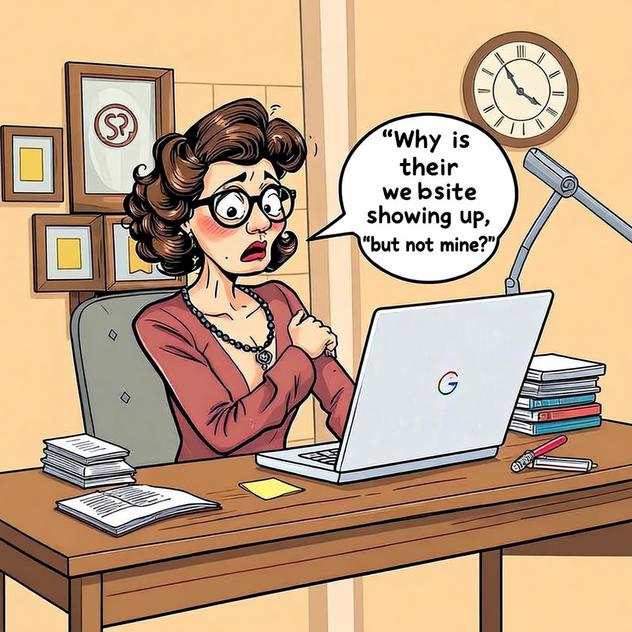
You check your analytics one morning and notice something unsettling. The visitors are down. The phone isn’t ringing like it used to. Your Google rankings — the ones you spent years building — seem to have quietly slipped away.
You’re not imagining it. And you’re not alone.
Business owners across every industry are watching organic traffic shrink. Some blame algorithm updates. Others blame AI. The truth is, the rules of getting found online have changed — and the old playbook isn’t enough anymore.
The good news? There’s a better strategy. And businesses that adopt it now will be much harder to ignore tomorrow.
The Wrong Question Most Business Owners Are Asking
Most people respond to dropping traffic by asking: “How do I get back to page one of Google?”
That’s the wrong question.
The right question is: “How do I get found wherever people are looking?”
That shift in thinking changes everything.
People are no longer just typing into Google. They’re asking ChatGPT who the best contractor in their area is. They’re watching YouTube before they buy. They’re checking Facebook reviews and industry directories. They’re getting recommendations from AI tools that have never crawled your website.
If your entire marketing strategy depends on one traffic source, you’re one algorithm update away from a very bad quarter.
Here’s how to build something more durable.
1. Build Your Brand, Not Just Your Rankings
For years, SEO was a game of keywords and backlinks. That still matters — but it’s no longer the whole game.
Today, AI systems are answering questions like:
- “Who is the best electrician in Worcester?”
- “What’s the most reliable industrial automation company in Massachusetts?”
- “Which roofing contractor has the best reputation near me?”
AI isn’t just scanning your website. It’s looking at your reviews, your mentions across the web, your reputation — your brand.
Businesses that invest in recognition will be the ones AI recommends.
That means gathering more reviews, publishing testimonials, writing case studies, and showing up consistently across every platform where your customers are looking. The goal isn’t just to rank. It’s to become the obvious answer.
2. Become the Local Expert People Actually Search For
Most business websites still make the same mistake: they talk about themselves instead of helping their customers.
Flip that.
Answer the questions your customers are already typing into search engines and asking AI tools:
- How much does a bathroom remodel cost in Massachusetts?
- How often should industrial equipment be serviced?
- What should homeowners know before replacing a roof?
Every helpful answer is a new door into your business. Google finds it. ChatGPT learns from it. Gemini cites it. Future AI tools will too.
Your competitors are still publishing generic “About Us” pages. You can publish answers that actually help people — and that’s exactly the kind of content that earns trust and visibility at the same time.
3. Treat Your Email List Like Gold — Because It Is
This might be the most important lesson from the recent wave of Google changes.
Search traffic can disappear overnight. Social media reach can vanish with a policy change. But an email list belongs to you. No algorithm can take it away.
If Google sends you fewer visitors tomorrow, you can still reach your customers directly. That’s a level of control most businesses don’t have — and it’s completely within reach.
Start building now:
- A monthly newsletter your customers actually look forward to reading
- Educational tips that make their lives or businesses easier
- Customer success stories that build confidence and trust
- Seasonal reminders that keep your business top of mind
An email list isn’t just a marketing tool. It’s a safety net. Build it before you need it.
4. Stop Putting All Your Reviews in One Basket
If all your reviews are on Google, you have a problem you may not know about yet.
AI systems don’t pull information from one source. They scan Google, Bing, Facebook, Yelp, and industry-specific directories. The more places your reputation exists, the stronger your digital footprint becomes — and the more likely you are to show up when someone asks an AI for a recommendation.
Start encouraging reviews in more places:
- Google (still important — don’t abandon it)
- Bing Places
- Industry platforms specific to your trade
- Your own website, through testimonials and case studies
More visibility across more platforms means more opportunities to be found, recommended, and chosen.
5. Tell Project Stories, Not Just Services
There’s a big difference between “We install HVAC systems” and this:
“We helped a Worcester manufacturing company reduce downtime by replacing an aging HVAC system during a planned shutdown — finishing ahead of schedule and under budget.”
Which company would you call?
AI understands stories. It understands context, industries, problems, and solutions. Detailed project stories help your business become relevant to the exact searches and questions your ideal customers are asking.
Case studies don’t have to be long. A few paragraphs — the challenge, what you did, the result — is enough. Write one for each type of project you do and watch what happens to your visibility over time.
Do not only add final project pictures, but also add work-in-progress pictures to your GBP and Facebook posts.
6. Video Is an Untapped Opportunity for Most Small Businesses
Here’s a secret most of your competitors don’t know: most small businesses avoid video entirely.
That’s not a threat. That’s an opportunity.
You don’t need a production crew. A smartphone and a willingness to talk on camera is enough to get started. Cover:
- Frequently asked questions your customers ask every week
- A walkthrough of a recent project
- Common mistakes you see people make
- What customers should look for when hiring someone in your industry
One video becomes a YouTube video, a blog post, social media content, a website resource, and newsletter material. The return on a single piece of video content is significant — and most of your competitors aren’t doing it.
7. Stop Depending on One Traffic Source
This is the lesson behind all the others.
The businesses struggling most right now are the ones that built everything on Google Search traffic — and nothing else. When that source weakened, there was nothing to catch them.
The businesses that are holding steady? They typically get leads from multiple places:
- Referrals and word of mouth
- Networking and community relationships
- Email marketing
- Google Search
- Social media
- Repeat customers
- Strategic partnerships
When one source slows down, the others carry the load. That’s not luck. That’s a strategy.
The Businesses That Win Won’t Be the Ones Who Chased Every Update
Google will change again. AI will keep evolving. Platforms will come and go.
But trust, expertise, and relationships will always matter.
The businesses that build a strong reputation, answer real questions, grow an email list, collect reviews everywhere, and become known as experts in their communities — those are the businesses that become very hard to replace.
We’ve started calling this approach Search Everywhere Optimization: not just Google, but ChatGPT, Gemini, Bing, YouTube, email, reviews, local directories, and referrals working together.
It’s the shift from chasing rankings to building something that lasts.
If your traffic has been slipping, this is where to start.